
One of the best parts of being a pastor is getting to spend time with people and getting to hear their stories. I’ve been in ministry for quite a while and I’ve had the chance to sit with all sorts of dear, dear people. I can’t tell you how much I’ve learned simply by sitting  down over a cup of coffee, keeping my mouth shut, and listening – especially to people who have more to offer than I ever will. A case in point was one of the most amazing women I’ve ever had the pleasure of knowing.
Ria, who was born in Germany in 1908, was 99 years old when I met her. She was a member of the church I was serving at the time but she could no longer attend services due to a fall she’d taken some years before – so I went to her home to visit. Ria, a rather petite woman, met me at the door – not with a warm handshake – but with a huge smile, a hug, and a kiss on each cheek. I had been told by others at the church that I could expect such a greeting from Ria and I could expect to be blessed beyond anything I could imagine. They were not wrong.
I sat down in Ria’s living room where we sipped on tea and ate a few cookies. After a few minutes, I noticed what I thought were framed photographs on the wall. Then I realized they were not photographs at all – they were intricate needlepoints. I had only ever seen this tapestry type work in museums. I immediately asked her about it and she told me she had learned it from her grandmother and her mother -growing up in Germany. I asked her if she still did that sort of work – and then she held up her hands and said, “Oh – no – not for a long-time now.” Her hands had been ravaged by rheumatoid arthritis. “But,” she said – grinning widely and holding up her thumb and index finger, “I still have these two fingers so I can hold a pen and do my crossword puzzles. The Lord has been goodt to me.”
I couldn’t help but smile at how joyful she was – even as I realized how painful her hands must be. But I was also intrigued by Ria and I asked her to tell me about growing up in Germany – how she came to be in the states.
Ria was born on a farm in Germany just a few years before the start of WWI. She was about 8 when one of her brothers went off to war – but never returned. She remembered how her family farm was impacted during the war but also how difficult life was in Germany after the war. But, she said, we were a Christian family and we saw the ways God took care of us – even in the very bad times – and so, she said again with that German accent – “the Lord was goodt to them.”
She told me how she met her husband, what a godly, Christan man – and a skilled machinist – a “tool and dye” man that he was. They had a happy beginning, she said, but, things in her country were volatile and strange. Even during their courtship – the Nazis had begun their rise to power. At one point, her husband – who had been a solider – was pressured to join the Nazi party (one of those would you like to join the Nazi party – or would you like to join the Nazi party requests) but his Christian convictions just wouldn’t allow him to do it. But they knew what that meant. They realized they had to leave their home and their country in order to keep from being forced to become something they could not become – or worse – so they fled to Holland and were taken in by another Christian family that they knew.
They had only been there a short while before the Nazis came to Holland and they were forced to go into hiding for quite some time. Eventually, she said, they were able to make  it out of Holland to the US – to Birmingham – where they had some connections. In all of this, she said again, “the Lord was goodt to us.”
However, within the first few months of living in Birmingham, her husband died. Ria found herself a widow, in a foreign country, where she knew very few people, and she didn’t speak English. She couldn’t go back to Germany – the Nazis were in power and her family told her it was best not safe to return. Can you imagine how she must have felt?
But – she said – “the Lord was goodt to me” – because through the little church that she and her husband had started attending – she was able to find work as a caretaker. It turns out that two brothers that attended the church-owned and operated a pharmacy and their mother needed some help. And, as it turns out, their mother had also immigrated to the US many years before from Germany. Ria said, their mother became like a mother to her. One of the brothers began helping Ria learn English and, after a few years, the two of them married.
Ria said, “God gave me a new family. The Lord was goodt to me.” She said they had a wonderful life together but were never able to have children – but they enjoyed being together for many years before her second husband passed away. Ria never married again – and at 99 – she had been a widow for over forty years – but – Ria said again – “the Lord has been goodt to me.”
The Lord’s Been Good To Me
I sat with Ria for a long time that day and visited her as often as I could after that – and called her when I couldn’t get by to see her. To be honest, it was more for me than for Ria because she was so joyful and the joy that she had was even more profound after I heard her story. Almost every time I saw her, I heard her say at least once “the Lord has been goodt to me.” She had a life of trials but she didn’t seem them as reasons to complain or to be bitter or to feel sorry for herself. She didn’t whine. Instead, she was joyful and she had a beautiful liturgy – “the Lord has been good to me.”
I aspire to be more like Ria. To me, she was the epitome of Christian joy. I thought about Ria the other day when I read Psalm 94. If you’ve ever read that Psalm you’ll know it begins with a rather harsh beginning – far removed from what may be considered joy. The psalmist wrote, “[1] O LORD, God of vengeance, O God of vengeance, shine forth! [2] Rise up, O judge of the earth; repay to the proud what they deserve! [3] O LORD, how long shall the wicked, how long shall the wicked exult? [4] They pour out their arrogant words; all the evildoers boast. [5] They crush your people, O LORD, and afflict your heritage.” Whew – man – that’s a doozy of a text. It is clear that the psalmist is going through some sort of trial – some tough days – and he’s not happy.
But then toward the end of Psalm 94, the psalmist says something that made me think of Ria: “[19] When the cares of my heart are many, your consolations brought joy to my soul.” In other words, when concerns, worries, anxieties over issues and trials bear heavy on my heart, God’s comforts cause my soul to delight to be joyful.
In Psalm 94, the psalmist recounts the reality of his world – and there are some major issues – he’s got some trials – but in the middle of all that, he says, “When the cares of my heart are many, your consolations brought joy to my soul.” And that’s the thing I keep finding as I read through the Bible and encounter texts that speak of joy.
Often in the Bible, whenever you find people going through trials – you often find some mention of joy; trials and joy are often coupled in the Bible. In fact, in the book of James – in the New Testament – he says to “Count it all joy, my brothers and sisters, when you meet trials of various kinds (ESV James 1:2). Of course, the reason for that is because that’s often where faith in Christ matures.
I think that’s what Ria was doing every time she said, “the Lord’s been goodt to me.” It truly was a beautiful liturgy – especially once I knew her trials. I realized later that she recounted all of those things that God had done for her even as she acknowledged how hard things were; she never lost sight of how God had seen her through it. In other words, she focused on God’s consolations – as the Psalmist said – and in doing so she found joy in things that others would have only found self-pity and bitterness – and her joy was contagious.
There is something to be said about recalling the way that God’s actions in our lives and in the Bible bring us consolation or comfort. In another Psalm – Ps 103 – David – the psalmist – wrote, “Bless the Lord oh my soul and all that is within me bless his holy name – bless the Lord oh my soul and forget not his benefits.” Then David lists them – and his list are those consolations that Ps 94 mentions and the very things that helped Ria that framed Ria’s beautiful liturgy. David said, “bless the Lord – who healed your disease, who redeemed you, who crowns your life with love and mercy…” On and on, David lists the things that God has done and in doing so he reminds us of God’s comforts and consolation.
You know, Ria was 101 when she passed away and that was in 2009 – but she left a legacy. I mean, here I am in 2020 and I always think of Ria when I think of joy. But when I think of her, I also remember her trials – because he trials and her joy go hand in hand. It was through her trials that she saw God at work – and when other trials came – she was joyful because she drew comfort from all that God had already done in her life.
I still smile when I think of that dear woman – who loved Jesus – holding up her thumb and index finger and saying “the Lord has been goodt to me” with a huge smile and a gleam in her eye. She will always be remembered – by those who knew her – as joyful. She saw her trials and considered them from the perspective that God is sovereign and He isn’t going to let anything into our lives that aren’t for our good and his glory. That may not be such an easy thing to swallow all the time because we do go through various trials – and they are not pleasant – but nevertheless, we can be joyful if we remember God’s comforts and the benefits of belonging to Him.
My prayer for you today – and for me – is the beautiful liturgy – one that is so full of joy – may prayer is that it will be yours – as it was Ria’s. That you will see whatever trial you are facing through the grid that you if you have placed your trust in Jesus – that you belong – body and soul – to him – and that is the greatest comfort in life and in death – so much so that come what may – we can say – “Lord has been goodt to you.”


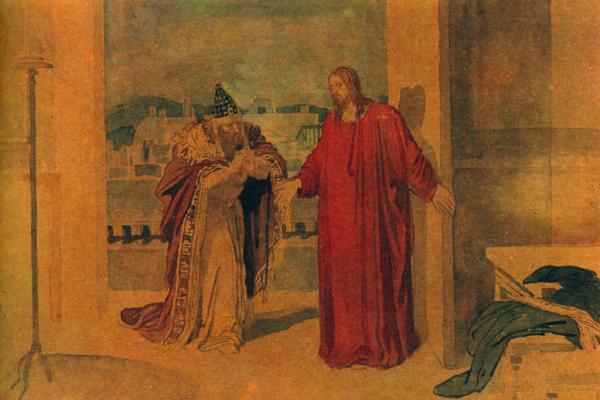
 to note that His disciples had scattered and two men – after receiving permission from Pilate – took care of Jesus’ body and gave him a proper burial. One of them was Joseph of Arimathea and the other was Nicodemus. Nicodemus brought 75 pounds of myrrh and aloes for Jesus (John 7:50-52; 19:38-40). I think that’s significant – don’t you?

 parades and fanfare – with balloons and a ticker-tape parade. That news came with warnings and guides for how those businesses will be allowed to open. The news was received with varying degrees of relief and confusion and uncertainty because we all know the virus isn’t gone.
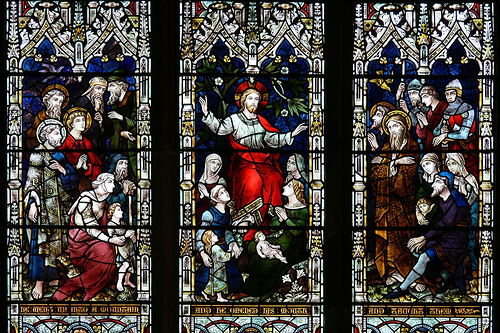


 me give you a quick summary. The novel is about a whole lot of people – actually – but it follows the life of a man named Jean Valjean. The story is set in France – thus the name Jean Valjean – and it takes place in the 1830’s – ish. But – Jean Valjean spent 19 years in prison for stealing a loaf of bread. When he is released, he is sent away from prison with his parole papers by a man named Javert – who basically haunts Jean Valjean throughout the novel. Javert is all law – no grace – sort of character.
 Misérables. Hugo developed the character of the Bishop of Digne from the life of a man named Charles-Francois-Melchior-Bienvenu de Miollis who was the actual Bishop of Digne. He was known for his simple lifestyle and his attention to the poorest members of his community – his devotion to Jesus; and, the real-life Bishop actually welcomed and helped a convict who had been imprisoned for 5 years for stealing a loaf of bread (Rose 1195). I suppose folks may have said that he had a strange, idiosyncratic way of looking at things and I suppose he may have gotten it from the Gospel.

 days may be a good way to encourage others. After all, when was the last time you received a hand-written letter or card from someone? How’d it make you feel? Did it cheer you up? Did it mean more than – well – say a form letter from the IRS?
 But, over the last month, I have clocked more hours on social media and visited more news sites than I ever have. More than a few times, I felt a bit overwhelmed by the sheer volume of things but also a bit troubled. From one site to another or one post to another or one person to another, the information changes and at times it is contradictory of what’s being communicated by experts, and at other times it is just not accurate and quite frankly, that’s not good. In fact, in some cases, it could be disastrous and hurtful to a lot of folks.
 if these things were so.” In other words, they did the work of discerning whether the things they were being told were truth – were right – were accurate based on a solid source. And after they did the work of discerning – then and only then – did “Many of them therefore believe.” I think that’s something practical that a lot of us should take to heart; Christians ought to do the work of discerning whether or not something is true, whether it is right, before we believing it or passing it on as truth.
 it means to share the Gospel, we bear witness to the Truth the Way and the Life but if we push falsehood forward – even with good intent – even unknowingly because we haven’t done the work ourselves of checking the source – it doesn’t bode well for us or for those in our community and in this case, it could cause great harm.


 These are dangerous times because it is easy to become discouraged. A lot of people are spending more time locked away at home than – well – maybe ever. And, a lot of people aren’t really around a lot of other people – at all – which can lead to being self-consumed – which can lead us to be discouraged when we are our only company. And, when you spend so much of your time in a confined space, even with lots of projects to do, well, discouragement can pop up unexpectedly. And, add to that, there is so much information going on around us that it is a challenge to know what is what and what to believe and what’s right. There is a lot of unknown – really – and we just aren’t used to that. We are used to getting accurate information at Google Speed. But if you Google COVID-19, you are going to get a ton of information and different models that predict different dates for peaks – and a lot of other information and it – just – well – at the end the day – who knows. We just don’t really know for sure – and we aren’t used to that – and that can be discouraging.
 worth noting again. When Paul wrote this letter to his friends in Philippi, he was not free to move about the city. He had a stay at home order, too. He was imprisoned for advancing the Gospel and found himself in chains and under constant guard.
 You can write a letter, too. You can write to people and just tell them you are praying for them and remind that God loves them and they can best see His love for them in the person of Jesus. You can call them and tell them that. You can send them an email. You can post it on Facebook, or Twitter – or Snapchat. You too can dig out and protect yourself from discouragement by looking to Jesus and encouraging others and advancing the Gospel.

 Honestly, I have no idea if he actually said it or not but it stuck with me. The poster had an enormous picture of Einstein and beside him, it said, “I want to know the thoughts of God, the rest are details.”
 a physician. During his training, one of his professors asked his students to examine a cadaver. He asked them to tell him what the dead man had done for a living.
 These ladies are the first to arrive. They are the first to discover that Jesus has risen. They are the first to hear the good news. They are to become the first evangelists in that they are told to go his disciples – and Peter – that Jesus has risen from the dead.
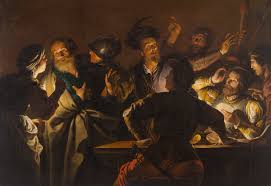 He didn’t. He didn’t die first. He didn’t stand up. Peter turned his back on Jesus. When push came to shove – Peter broke ranks with Jesus. He denied knowing him. The very last thing he thought he would ever do – he did. He blew it. When it counted, he failed.

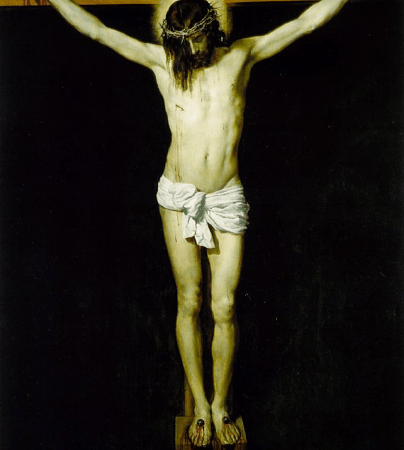
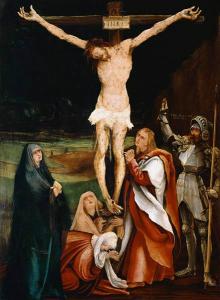

 that requires stillness of heart and soul in order to fully reflect on the fact that “Jesus willingly took my place to suffer the just consequences of my sin, that I might be set free from sin’s guilt and power.” That’s the other side of Good Friday and the part that can’t be neglected but the part that requires stillness of soul and heart.




 Mark A Hutton